The following is an outline of what to expect when you attend a Falnorian event. All Falnorian events share the same basic structure, with flexibility reserved to deal with environmental realities such as player needs or inclement weather. New players do not need to read this before participating, but may find it very helpful!
Setting Up: Players arrive at 10AM and help unload the gear from the trailer and set up. All players are expected to help unload the equipment; both because helping with the equipment is considered a community responsibility, and because it makes the process go faster – which means more time for game!
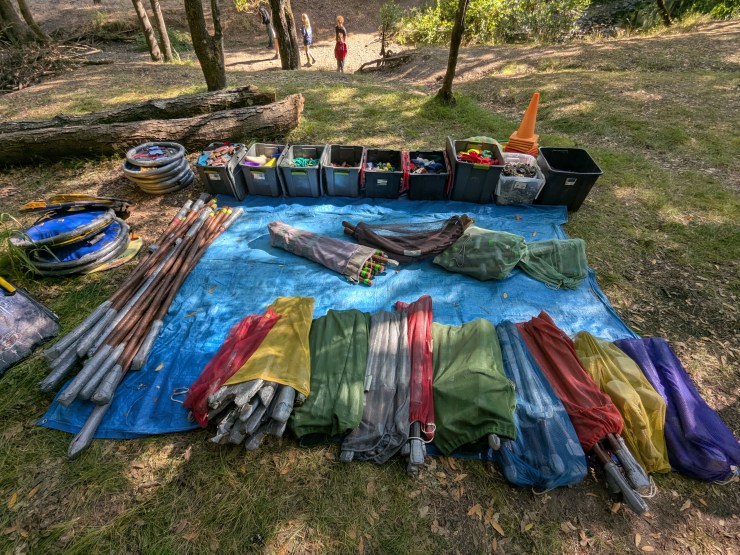
Warm Up (JL Only): After unloading, Junior League events play several rounds of capture the flag as a quick warm-up. During this time, if there are any new players, a GM will teach them the rules and then take them out to play capture the flag to give them some practice with the basics of the game rules.
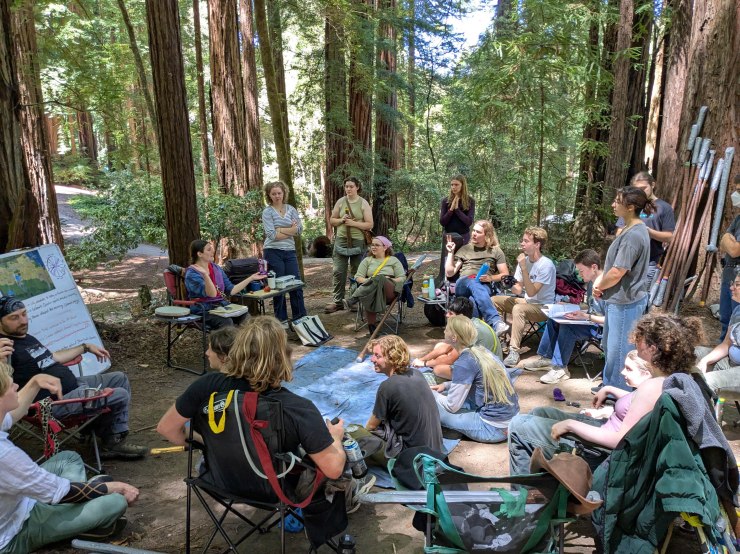
Announcements: Once all players are gathered up in the inn space, any announcements for the day are delivered shortly before mission briefing. Announcements may typically include any changes to a day’s logistics, notification about additional events, any major rules changes, etc. Out of Game questions are also answered during this time so that once mission briefing begins it stays in-game and in-character.
The Inn: Once the inn scene begins, the event is now “in game”. Players act as their characters and are expected to refrain from out-of-game questions or comments. Mission briefing typically has three distinct phases:
- Briefing: An innkeeper, played by the GM, will post the mission sheet and deliver the news and weather for the day. They will then go through list of missions and describe in more detail any background information on the mission, what the problem is, and what the town wants done about it. After briefing, innkeepers will usually take questions from characters who want more information.
- Discussion: As their characters, players discuss their options, weigh the importance of each mission, and debate which ones should be the priorities for the day. During this time they may work to persuade other characters to support their plan, share any additional information they may have, and evaluate potential risks involved in each mission. If characters wish to add any missions that aren’t on the board, they are generally proposed during the discussion phase.
- Deciding: Once discussion of missions has mostly resolved, the decision phase follows. During the decision phase, characters vote on their preferred missions; in general, players can each vote for multiple missions, and the mission with the most votes wins.
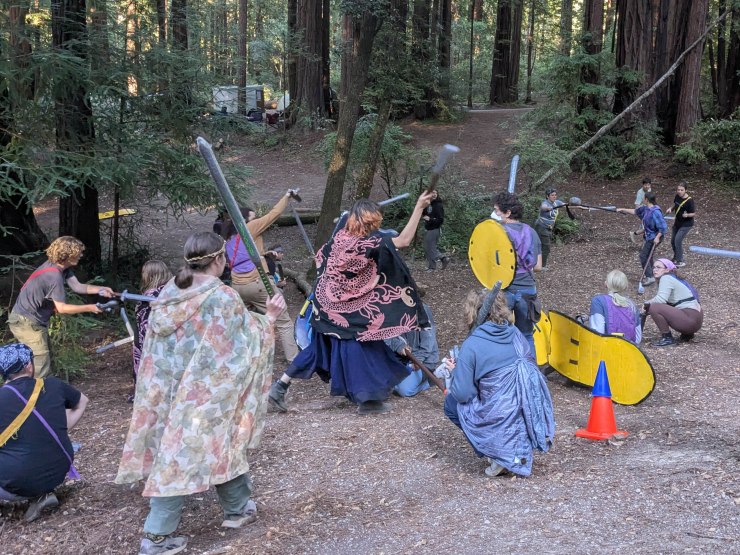
Missions: Once the party has chosen a mission, the players divide into two groups: “goodies” and “baddies”. Goodies consist of the characters who want to go on the chosen mission; “baddies” are the players who choose to play as the monsters and NPCs instead of going on the mission. Each group suits up – goodies as their characters, and baddies in a purple pinny or sash – and meet at the stated rallying points for their respective groups. Characters begin RPing while the baddies are briefed on their roles and suit up. Missions typically include both “on the way” encounters and the scene of the mission itself.
- Encounters: Encounters are scenes that characters run into while traveling to the locus of the mission. The further away the mission is, the more encounters they will run into on the way. Encounters can consist of any number of situations: they may be a danger the party encounters on the road, a situation that requires the party’s help, or simply other NPCs in the world going about their business. Encounters often contain hints about the current mission or other missions on the board.
- Mission Scene: Once the party has completed the encounters along the way, they will arrive at the site of the mission. Mission scenes vary widely depending on the nature of the mission: they may consist of one scene during which players resolve the underlying problem, several rounds of dealing with an opposing force, or turn out to have many more parts than anticipated. The party will almost always play through the entire mission scene, but may occasionally find they need to leave without resolving the situation in order to secure more help from a nearby city.
Debrief: Once characters complete the mission scene, they return to the inn to speak with the innkeeper. The players brief the innkeeper on what happened, how they resolved it, and inform them of anything else the city should know regarding the situation. Once debrief is finished, the party returns to the mission board – briefing, discussion, and deciding – while considering any new information they have gained from the previous mission and adjusting their plans accordingly.
Lunch: Once the day reaches 1PM, we will either wrap up the current mission or pause it if it cannot be wrapped up quickly. Players take a break to eat lunch; this is considered “out of game” time to hang out, socialize, and play other games together. The GM may or may not be available for questions and small tasks during this time. During Junior League events, GMs will generally leave the park for lunch to discuss planning without players present. At the end of lunch, all players are expected to help tidy up the gear before afternoon set; second set does not start until all the gear has been put back where it goes. Once everything is tidy, we pick missions back up where we left off.
Cleaning Up: Once the day ends, all players are expected to stay and help clean up and put away the gear. Afterwards, we tie up any loose ends: signing off character sheets, drawing for characters’ deaths (if applicable), and resolving any questions about the state characters are currently in.
 Falnorian Games